My Rosacea 3: tips from Lucy Partington, beauty editor and rosacean
Part three of my rosacea series, featuring expert tips for rosacea management

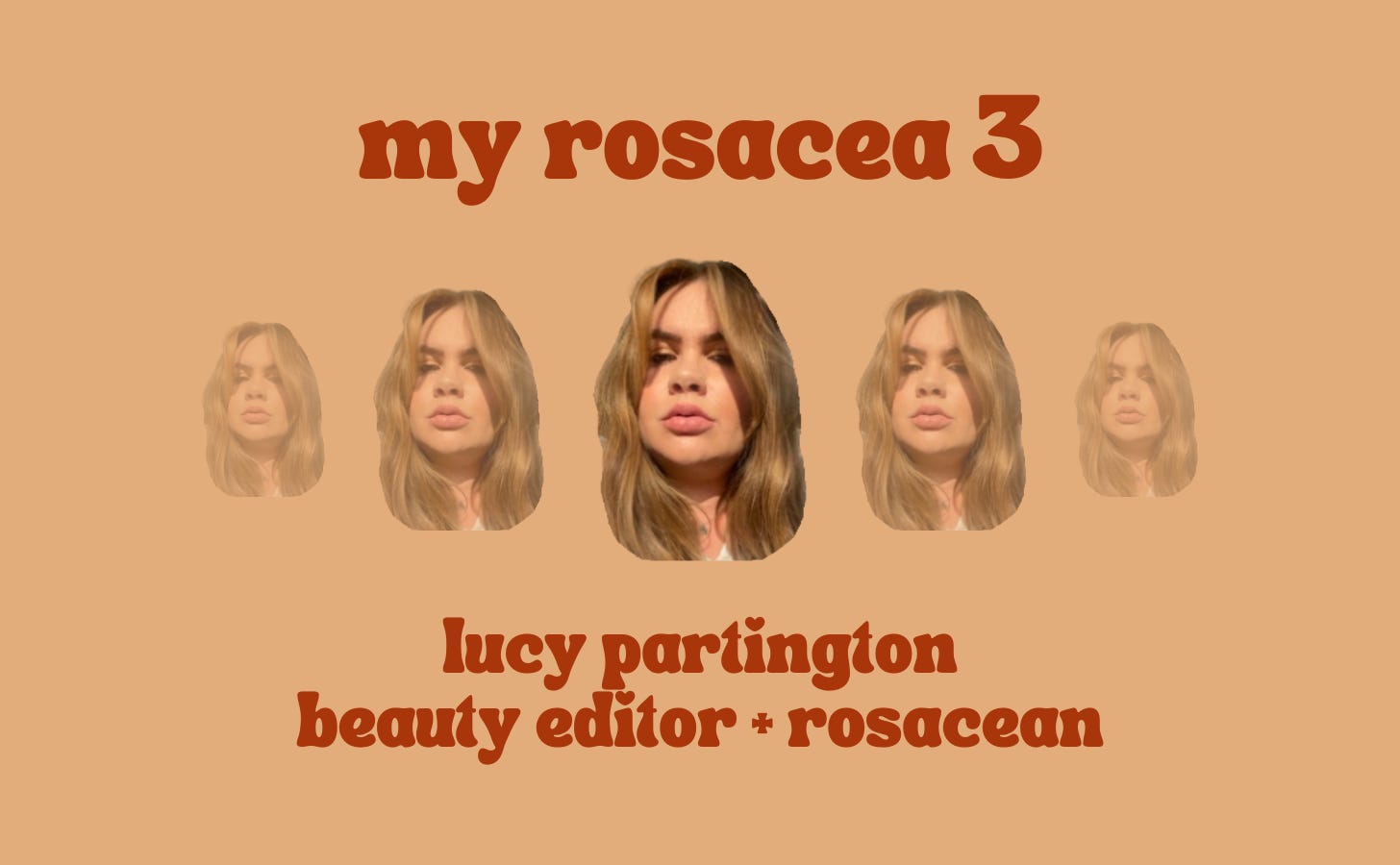
My Rosacea 3: rosacea experts share their tips
Welcome back to my new Substack series, ‘My Rosacea 3’. I have access to so many incredible experts and leading voices in all sorts of fields related to skin, and I wanted to find a way to share all of that expertise with you, without it feeling overwhelming or complicated.
Which is where My Rosacea 3 comes in. In each article, I will ask the experts to briefly summarise their extensive knowledge so I can bring it to you in bitesize, informative chunks. We’ll cover product recommendations, things they wish you knew, some accounts to follow for information, and simple wins you can implement today to help your skin.
You can read the other interviews in the My Rosacea 3 series HERE.
Who is our expert?
A beauty editor and content creator based in London, Lucy specialises in skincare and honest, evidence-led beauty journalism, writing for a mixture of digital and editorial platforms including Stylist, Glamour, The Telegraph, British Vogue and Elle UK.
Her work focuses on cutting through trends to highlight what genuinely works in real life, with a strong emphasis on both accessibility and overall skin health. Rosacea has played a personal role in shaping her approach to skincare, particularly around barrier support, trigger awareness and building routines that prioritise calm, consistent skin over quick fixes, as well as understanding the impact that skin concerns can have on confidence.
Follow her on INSTAGRAM and SUBSTACK.
Let’s jump into the questions kindly answered for us by Lucy:
Three things you wish people knew about rosacea
Rosacea comes in many different forms, and it’s not just about ‘blushing’ or being sensitive to certain products – it can affect confidence, social plans, dating, literally everything, and it’s completely valid. I think the emotional side is often underestimated because people only see the redness, and not the hyper awareness that comes with it.
All types of rosacea – no matter how mild or severe – deserve to be diagnosed so you can learn the best way to manage it. I always suffered with redness (turns out those rosy cheeks I had as a child could have somehow, somewhere been a precursor for the rosacea I’ve now got) and for a long time it affected me, but I didn’t think it was ‘bad enough’ to warrant a GP’s appointment. It was only when I had an appointment with Dr Justine Kluk, a consultant dermatologist, in around 2019 that she officially diagnosed me. Since then, I’ve taken the time to understand and learn what works for me and my skin, as well as taking more notice of potential triggers.
What works for me might not work for you. It’s so easy to feel disheartened when you shell out on a so-called ‘miracle’ product and it doesn’t end up working for you, and that’s why I think seeking the help of qualified doctors and trying not to compare yourself with others is so important.
Three product recommendations for rosaceans
Skinoren 20% azelaic acid cream: discovering azelaic acid was a gamechanger for me and my skin. I was diagnosed with acne at the same time as my rosacea, and that’s when I was also first introduced to it as an ingredient. I went straight in with Skinoren – which is a prescription strength cream – and it truly worked wonders. It’s the sort of product that I know I can always fall back on. It’s not sexy but it’s reliable. I tend to get mine from The Independent Pharmacy, you do have to fill in a survey but it saves the hassle of trying to get your GP to prescribe it.
Dr Sam’s Flawless Brightly Serum: You’ll probably sense a theme here, but Flawless Brightly Serum is a gentle but powerful combination of vitamin C and – you guessed it – azelaic acid. It was one of the first non-prescription serums I discovered that used azelaic acid, and in true Dr Sam’s style, it’s got an elegant texture and the formulation is really considered. I love how well it layers with both SPF and make-up, and it really does work to help target redness while also brightening skin and protecting against antioxidant damage.
Medik8 Niacinamide Peptides: Now, I know niacinamide is a bit of a love/hate ingredient, but my skin responds so well to it. And, despite the fact this product only launched at the start of the year, I’m currently working my way through my fourth (!) bottle. It’s that good. I use it twice a day, and the reduction in both redness and breakouts is actually insane – my skin is the clearest and most even it’s ever been and I genuinely think it’s down to this serum and my consistency in using it.


Three changes a rosacean could make today that would have an impact
Choose consistency: I was (and still can be) the queen of using different products every morning and evening. It’s part and parcel of my job, but I’ve learnt that sticking to the ingredients that I know work is the key to happy skin.
Keep note of your triggers: my rosacea isn’t as severe as it could be, but I know a glass of champagne or any sort of sparkling wine will (sadly) make my skin flare, so I just try and avoid drinking it. I appreciate it’s not that easy for some people (because realistically, how often am I in a situation that sees me drinking champagne?!) but I think just being aware of what causes a flare-up is important, and then you can decide whether or not it’s worth the discomfort. Sometimes it might be, and that’s totally fine and very much allowed, but other times it won’t be. Life is for living, so try not to be obsessive, and remember that patterns are oftentimes a lot more useful than perfection.
Prioritise your skin barrier first: This is something I learnt far too late, but a happy skin barrier is truly key. It’s easy to think that trying to tolerate harsh exfoliants or high-strength retinoids is key, but a compromised barrier can lead to skin that’s stuck in a cycle of irritation and that’s absolutely not what we want here. If in doubt, strip it all back and opt for gentle, nourishing products.
Note from Lex: I have a whole post on the skin barrier that you can find here if you want more information:

Three people you would recommend following on social media for information about rosacea/skin
Dr Anjali Mahto at Self London – A true expert in her field, I would trust Dr Anjali with my life. I love her no-nonsense and truly educational approach. And, if you’re interested in treating rosacea with lasers, she’s a wealth of knowledge and offers different types in her clinic.
Dr Sam Bunting – Dr Sam really knows what she’s talking about, her social media pages are super educational and I really do think she takes a variety of skin conditions, including rosacea, into account when she’s formulating skincare, as well as the importance of elegant textures that you actually want to use.
Dr Sonia Khorana – The queen of quickfire advice and educational videos, I like how Dr Sonia makes her content accessible, bitesize and easy to understand.
Thank you so much to Lucy for sharing her recommendations and tips with us: she has such a unique perspective, as someone who has worked in beauty for such a long time but also has rosacea herself so I was really happy when she agreed to share her knowledge with us.
Don’t forget to let us know in the comments below if you found this useful and/or interesting, I would love to hear from you!